
Amref Health Africa has designed and refined a communications strategy that works and should serve as a model for African social impact organizations.
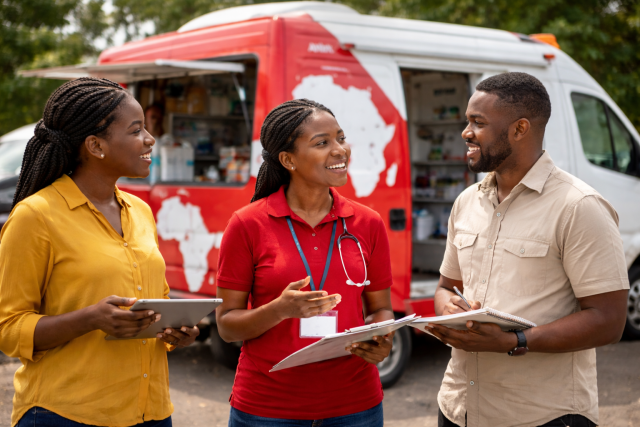
In 2020, when COVID-19 brought the world to its knees with millions cooped indoors due to lock-downs, the initiative, which delivers 193 health programs across 42 African countries, launched a multi-channel communications strategy in Uganda to tackle COVID-19 misinformation that threatened public safety.
The strategy leveraged mass media not as an instant PR tool, but as a core program tool, using culturally inspired messaging that consistently reached communities at scale.
Beyond external channels, Amref Health capitalized on its in-house communications channels, such as the website/blogs, digital/social media platforms, and stakeholder communications, implementing an omnichannel strategy that converts hearts and minds.
The game plan, which has proven to be a powerful 360 communications stack, worked and has been reused to address similar challenges over time. Fears were allayed, and disinformation disappeared.
The problem
It’s important to note that the social impact and the NGO ecosystem’s indifference to the media are accidental. As early as the 1960s, before the advent of digital media, communications channels were restricted to national radio, television, and newspapers. Access to the media was deeply centralized and expensive. Local newsroom, editors and foreign correspondents decide what makes the news, and what should not.
The Zeitgeist of the 1960s-80s era was different. Globally, it was an era of the Cold War among the US, the USSR, and China, and the focus of international press agencies such as Reuters and the Associated Press (AP) was on these three powers. Locally, it was a post-colonial period for Africans. After independence, the media was nationalized and used as a state propaganda tool.
Social impact organizations have never had the opportunity to communicate their programmes and impacts on a larger scale. Early NGOs and INGOs relied on print reports, donor reports and newsletters circulated only within the aid community to communicate their impact.
Communications output was centralized, one-directional, and limited in cultural inclusion.
These factors affected the impact organization, which had been operationally conditioned to view communications as a minor component that only needed to be included in donor or general reporting.
Shifting paradigm
At the turn of the 21st century, the emergence of the internet and related technologies has transformed how humans communicate. Traditional and centralized platforms such as radio, TV, and newspapers gave way to new tools, including computers, smartphones, and websites, that decentralized information consumption. The old guard of information – deeply centralized and controlled – gave way to the new – decentralized and ubiquitous.
The political climate had also changed. Globally, the USSR fell, and the Cold War era had given way to modern democracies across Europe. In Africa, democratic governance had begun to take root, and internet and smartphone penetration provided millions of people with greater access to information.
As a result, the state media’s monopoly of information collapsed, and more private/decentralized media channels flourished. Media freedom increased and gave birth to citizen and digital journalism and its acolytes – news blogs and independent sites. Internet penetration enabled these platforms to proliferate rapidly and deeply across the continent.
Digital platforms helped bring out perspectives long marginalized and silenced,” Rosebell Kagumire, Ugandan Journalist and activist on the digital media empowering previously excluded voices on the continent.
Catch up
From entertainment to fashion, many industries have leveraged traditional and digital media to evangelize their mission, winning many souls along the way. However, the social impact industry in Africa still plays catch-up in communicating its impact to a mainstream audience.
While social media has helped spread information about programmes, platforms such as TV and radio have not been effectively deployed to create awareness and effect the positive change the industry truly desires.
For context, Radio remains the most common source of news in Africa, despite social media’s presence on the continent, according to a report from African Barometer. Across the 39 surveyed countries, two-thirds (65%) of the respondents tune in at least a few times a week. Television ranks second at 51%.
Now imagine how a good TV or radio campaign could contribute to your programme – especially when culturally sensitive messaging is targeted at the beneficiaries using radio.
That is what Amref Health Africa did, which is worth emulating. Rather than executing people-centric programmes through a centralized communications strategy or with no strategy at all, copying Amref’s 360 communication strategy will prove effective for your programmes.
Social impact organizations need to stop treating communications as an afterthought or playing catch-up if they want to achieve lasting impact.
What you can learn from Amref
Amref is the model for social impact communications. A visit to their website, social media, and YouTube channels shows how intentionally the organization tells its stories and controls its narrative.
On its home page, there’s a newsroom section that disseminates news, updates, stories, and reports about the organization, and on YouTube, the channel tells audiovisual stories about its programmes that demonstrate clear impact and inspire change.
Your organization may not have the resources to produce Amref’s output at the current scale of its operations. But with your limited resources, you can do the following:
- Enshrine communications into your organization’s strategy. Establish it as a core department, on par with the finance unit. When communication sits at the table of decision-making, rather than being the least considered component, its impact is more pronounced.
- Play the long game. With communications, we are often tempted to expect quick results. We treat it as a crop and its harvests. But we forget that, in communication, we are dealing with a complex entity: humans. According to research, adults rarely change suddenly. Meaningful change occurs in stages, and it may take months to years before it is visible. So be patient and play the long game.
- Leverage the Mass media. Surveys from the African Barometer have shown that Africans, despite the growing influence of social media, remain attached to their radio sets and TV screens. Design a mass media strategy that gets your programmes in front of them, since they congregate across these platforms.
- 360 Comms works. Be Omnipresent, ensuring you reach all your target audience across all platforms. Use digital media, traditional channels, social media platforms, and your website. Be everywhere.
- Partner Offline Stakeholder: Beyond social and digital media, stakeholder communication works perfectly. They have local intelligence, and some are opinion leaders whose constituency looks up to them. The key to succeeding offline is finding them early and engaging them. You need them on your side, especially when you start implementing your programmes.
When all of these are done intentionally, success is guaranteed, and you can be confident your strategy will stand the test of time.
If you enjoyed reading this, please share your thoughts and send them to others in the social impact industry.
Additionally, if you enjoy what is written here, you can contact me at festus@festusiyorah.com. I have been working in the social impact space for 5 years and offer high-quality research and consulting services in the social impact and communications sector. Contact me and let’s talk.